 Stride Review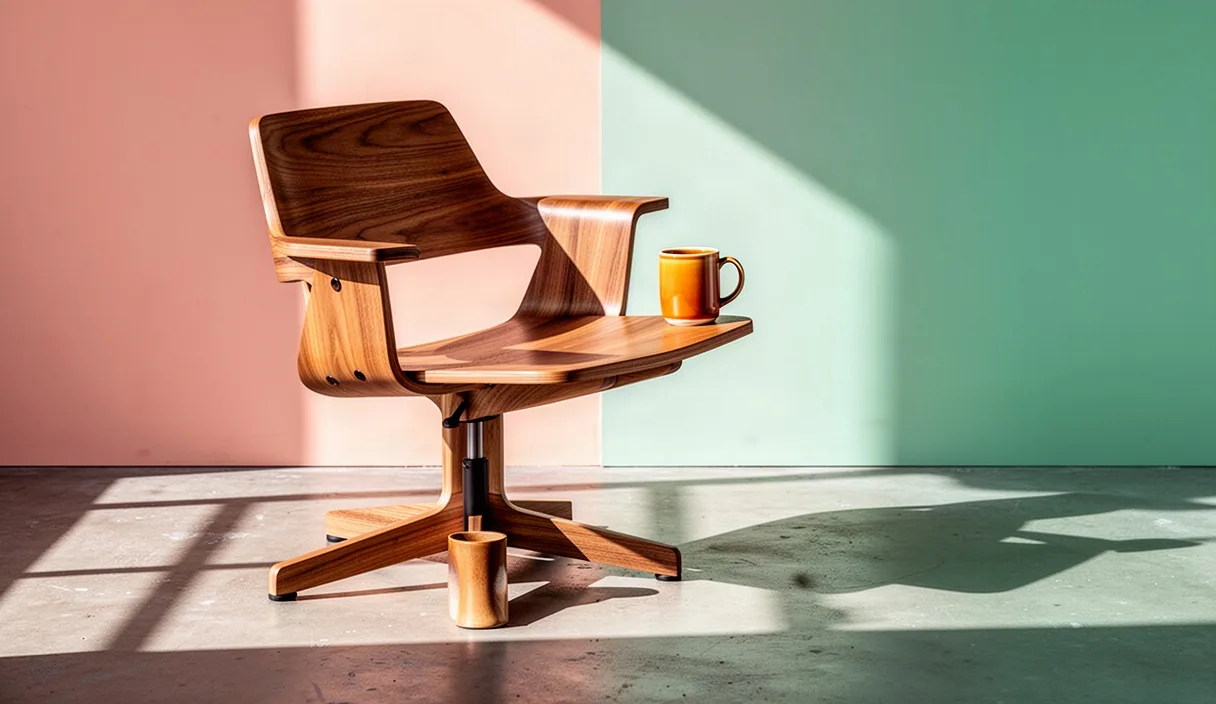
Most office workers know the sensation of standing up after three uninterrupted hours at a desk. The knees straighten, but the hips feel stubborn, as if a thick canvas strap inside the pelvis refuses to unfold. You might take three or four stiff, tentative strides before your stride feels normal again. It is easy to dismiss this stiffness as simple fatigue, but your tissues are responding to mechanical input. Your body adapts to the shapes you ask it to hold every day, and a seated chair holds your hips in an acute bend for thousands of hours each year.
What actually happens inside your joints during those long work sessions? To understand why your hips feel tight, you do not need to memorize medical textbooks. You only need to look at how muscles behave when they spend all day in a slack, folded position, and how that fold tugs on the rest of your skeleton when you stand up. When you understand the mechanical cause, the remedies stop feeling like guesswork and become straightforward daily maintenance.
The biomechanics of prolonged sitting in a chair
When you stand upright with your weight balanced between both feet, your hip joint rests in neutral extension. In this position, your thigh bone, or femur, sits in a vertical line beneath your pelvis. When you sit down on an ordinary office chair, your thighs form a ninety-degree angle with your torso. This position is called hip flexion. In hip flexion, the distance between the front of your pelvis and the top of your knee shrinks by several inches. The muscles responsible for pulling your knee toward your chest spend the entire workday held in this shortened configuration.
Muscles are not static cords of rubber. They are living tissues made of microscopic sliding proteins called actin and myosin, wrapped in sheets of connective tissue called fascia. Fascia behaves much like wet plastic wrap: when you keep it bunched up in one shape for hours at a time, it begins to mold into that shape. Over weeks and months of eight-hour workdays, your nervous system and your fascia adapt to the folded position. This process is known as adaptive shortening. The tissue literally resets its resting length to match the chair.
At the same time, the joint capsule itself experiences uneven fluid pressure. Within the hip socket, synovial fluid lubricates the contact point between the head of the femur and the pelvis. In a deep, static seated posture, the front of the capsule gets compressed while the back of the capsule is held open. Without regular movement to pump fresh fluid through the joint, the capsule stiffens. By the time you push your chair back at five in the afternoon, your hip flexors have spent hours resting in an abbreviated position, making sudden extension feel like pulling on cold taffy.
Why shortened hip flexors pull on your lower spine
Why does tightness in the front of the leg cause an ache in the small of your back? The answer lies in the anatomy of a deep muscle called the psoas major. The psoas originates along the sides of your five lumbar vertebrae in your lower back. From there, it travels downward through your pelvis, joins another muscle called the iliacus to form the iliopsoas, and anchors into the inner top edge of your femur. Because this muscle connects your spinal column directly to your leg, it acts as a mechanical link between your torso and your limbs.
Think of your spine as a tall mast on a sailboat, and the psoas as a heavy rigging wire anchored forward to the deck. If that wire is cinched down tight, what happens when you try to stand the mast straight up? The wire yanks the mast forward and down. When you stand up from your desk with shortened hip flexors, those muscles refuse to let your pelvis level out. Instead, they tilt the top rim of your pelvis forward. This forward rotation is called anterior pelvic tilt.
As the pelvis tilts forward, it drags the lower lumbar vertebrae with it, exaggerating the inward curve of your lower back, known as lordosis. This structural shift alters the way your upper body transfers weight into your hips, concentrating compressive force on the facet joints at the rear of your spine rather than distributing it evenly across the vertebral discs.
| Pelvic Alignment | Hip Flexor State | Lower Back Curve | Load Distribution |
|---|---|---|---|
| Neutral Pelvis | Resting length balanced | Natural, gentle inward arch | Even across discs and joints |
| Anterior Pelvic Tilt | Adaptively shortened and stiff | Deep, exaggerated lordosis | Concentrated on posterior facet joints |
| Posterior Pelvic Tilt (Slouch) | Slack but functionally weak | Flattened or rounded lumbar spine | High pressure on front of spinal discs |
When you feel an ache in your lower back after standing up from your desk, the back muscles are often not the primary instigator. They are working overtime as a counterweight, straining against the shortened hip flexors that continue to pull your pelvis forward like an over-tightened guy-wire.
The dormant glute problem and how to spot it
The human muscular system operates on an automated balancing principle known as reciprocal inhibition. When your brain signals one muscle to contract, it automatically sends an inhibitory signal to the muscle on the opposite side of that joint to relax. For instance, when you flex your bicep, your tricep relaxes so your arm can bend smoothly. The same relationship exists around your pelvis: your hip flexors sit on the front, and your gluteal muscles sit on the back.
When your hip flexors stay tight and active in a seated posture, your nervous system dials down the activity of your gluteus maximus, the primary muscle that pushes your hip into extension. In addition to reciprocal inhibition, the glutes endure hours of sustained mechanical pressure from the weight of your torso resting on the chair. This compression reduces blood flow to the tissue. Over time, your brain struggles to recruit the glute muscles during basic tasks like walking up stairs or standing upright. Fitness professionals often call this pattern gluteal amnesia, though it is not true nerve damage; it is a learned habit of disuse.
You can check your own recruitment patterns right now using a straightforward self-assessment called the prone hip extension check:
- Lie flat on your stomach on a carpeted floor with your legs straight.
- Place your left hand flat against your left glute, and place your right hand on your left hamstring, which is the back of your thigh.
- Slowly lift your left leg two inches off the floor without bending your knee.
- Pay close attention to which muscle contracts first under your palms.
In a healthy movement sequence, your glute should fire first to anchor the hip, followed closely by the hamstring. If you feel your hamstring cramp immediately while your glute remains soft to the touch, your body is using secondary muscles to compensate for a glute that has gone quiet. When the glute refuses to do its job, the hamstrings and lower back absorb the extra workload, creating chronic tension behind the hip joint.
Three simple movement snacks for desk workers
A movement snack is a targeted physical drill that takes less than two minutes, designed to interrupt prolonged stillness before your connective tissue hardens into a seated mold. You do not need gym clothes or special equipment to perform them. Set a timer to prompt you every 45 to 60 minutes, then pick one of these three drills.
The Half-Kneeling Hip Opener
This movement stretches the iliopsoas without placing shear stress on your lower back. Find a patch of carpet or place a soft cushion under one knee.
- Place your right knee on the cushion and step your left foot forward so your legs create two distinct right angles.
- Rest your hands on your front thigh. Instead of lunging forward, tuck your tailbone under your pelvis, as if pointing your belt buckle toward your chin.
- Squeeze your right glute firmly. You should feel a distinct stretch along the front of your right hip and thigh.
- Hold this tension for 35 seconds while taking slow, nasal breaths. Switch sides and repeat.
The Standing Hip Hinge
This movement wakes up the posterior chain, which includes your hamstrings and glutes, while teaching your pelvis to pivot over the hip joints rather than rounding your spine.
- Stand with your feet shoulder-width apart, roughly six inches in front of a wall, facing away from it.
- Place the edges of your hands directly into the creases of your hips where your thighs meet your torso.
- Keeping your spine tall, push your hips backward toward the wall until your rear touches it lightly. Your knees should bend only slightly.
- Pause for two seconds, feel the stretch in your hamstrings, and then drive your hips forward by contracting your glutes to return to standing. Complete 10 repetitions.
The Glute Bridge Reset
If you have floor space in a private office or home workspace, this drill restores communication between your brain and your gluteal muscles while extending the front of the hip joint.
- Lie on your back with your knees bent and your feet flat on the floor, hip-width apart, about six inches from your rear.
- Press your arms flat into the floor beside you for stability.
- Flatten your lower back against the floor to eliminate any arch, then drive through your heels to lift your hips toward the ceiling.
- Stop when your knees, hips, and shoulders form a straight diagonal line. Squeeze your glutes tightly at the top for three seconds without arching your spine.
- Lower down under control. Complete eight slow, deliberate repetitions.
How to set up your chair to reduce pelvic tilt
Most people are taught that perfect posture means sitting like a soldier: back straight, knees bent at exactly ninety degrees, and feet planted on the floor. In reality, a rigid ninety-degree angle keeps the hip flexors under constant contraction. Modifying your chair geometry to open up that joint angle relieves pressure on the anterior hip structures.
Begin by adjusting your chair height. Raise the seat pan until your hips sit two to three inches higher than your knees. When your knees drop slightly below your hip sockets, the angle between your femur and your torso opens to roughly 105 degrees. That extra 15 degrees of opening reduces the compressive force on the front of the joint capsule and makes it harder for the psoas to drag your pelvis into an extreme anterior tilt.
Next, adjust the tilt of your seat pan. If your chair allows it, angle the front edge downward by two or three degrees. This forward slope encourages your pelvis to settle into a neutral, upright balance point where you sit directly on your ischial tuberosities, commonly called the sit bones. If your chair has a fixed, flat seat, a firm wedge cushion placed under your rear achieves the same result.
Finally, examine your lumbar support. The curve in your chair back should fit snugly into the small of your back to support your natural inward arch, but it should not shove your lower spine forward. If the lumbar cushion feels like a hard log pushing into your kidneys, reduce its depth. You want the chair to support your back, not force it into an exaggerated arch that mimics the exact pulling action of shortened hip flexors.
Common mistakes
When hip stiffness sets in, desk workers frequently turn to remedies that make the mechanical problem worse. Avoiding these four common errors will protect your joints from unnecessary irritation.
- Over-arching the spine during stretches: When lunging to stretch the front of the hip, many people let their stomach sag toward the floor and arch their lower back. This movement completely relieves tension on the hip flexor and transfers all the strain into the lumbar facet joints. Always tuck your tailbone before extending the hip.
- Aggressive foam rolling over the front of the hip: Rolling directly over the hip crease can compress the femoral nerve and the sensitive bursae of the joint. Foam rolling belongs on large muscle bellies like the quads, hamstrings, and glutes, not directly over the front of the hip joint.
- Relying on deep couches: After sitting in an office chair all day, resting on a soft, low sofa places the hips in an even deeper flexed angle, sometimes past ninety degrees, while rounding the lumbar spine into a slouched posture. Opt for a firm, upright seat during the evening.
- The weekend warrior habit: Sitting immobile for forty hours Monday through Friday and then running seven miles or lifting heavy weights on Saturday morning shocks unconditioned, shortened tissues. Frequency beats intensity every time.
Practical next steps
Reclaiming hip mobility does not require hours of daily stretching. It requires consistent mechanical reminders delivered to your tissues throughout the day. Start by making two concrete changes tomorrow morning. First, raise your desk chair by two inches so your knees sit lower than your hips. Second, set a silent recurring alert on your computer or phone to go off every 50 minutes. When the alert sounds, stand up, perform 10 repetitions of the standing hip hinge, and sit back down.
Pay attention to the signals your body provides over the coming weeks. A gradual reduction in morning stiffness, easier transitions from sitting to standing, and a lighter feeling in your lower back are reliable signs that your pelvic tissues are adjusting to their new balance.
Keep in mind that not all hip pain stems from simple muscle shortening. If you experience sharp, catching sensations inside the joint, pain that radiates down your leg past the knee, or numbness in your feet, these symptoms point toward nerve compression, labral issues, or structural changes that require formal assessment. In those instances, consult a licensed physical therapist or an orthopedic physician who can evaluate your hip anatomy directly.